Investing in rental properties continues to be one of the most reliable ways to build long term wealth, generate passive income, and create financial stability. As more investors enter the market, understanding the requirements for financing investment properties has become increasingly important. Whether you are purchasing your first rental home or expanding a growing portfolio, having a clear understanding of what lenders look for can help you secure better loan terms and faster approvals.
At Simplending Financial, many real estate investors seek guidance on how to navigate the loan approval process efficiently. One of the most effective ways to prepare is by following a complete Single Family Rental Loan Requirements Checklist.
This guide covers everything you need to know about qualifying for single family rental loans, including credit score expectations, income verification, property requirements, reserve requirements, and documentation needed for approval.
What Are Single Family Rental Loans?
Single family rental loans are financing solutions designed for investors purchasing or refinancing residential properties intended for rental income. These loans are commonly used for:
• Single family homes
• Townhomes
• Condominiums
• Detached rental properties
• Long term investment properties
Unlike traditional owner occupied mortgages, single family rental financing focuses more heavily on the investment potential of the property and the borrower’s ability to manage rental debt responsibly.
Many single family rental lenders now offer flexible programs tailored specifically for real estate investors, including DSCR loans, portfolio loans, and cash flow based financing options.
Why Understanding Loan Requirements Matters
Preparing in advance can significantly improve your chances of approval while helping you secure competitive rates and terms.
A strong application can help you:
• Close deals faster
• Improve negotiation power
• Access lower interest rates
• Qualify for larger loan amounts
• Expand your investment portfolio more efficiently
Knowing exactly what lenders require also helps you avoid delays during underwriting.
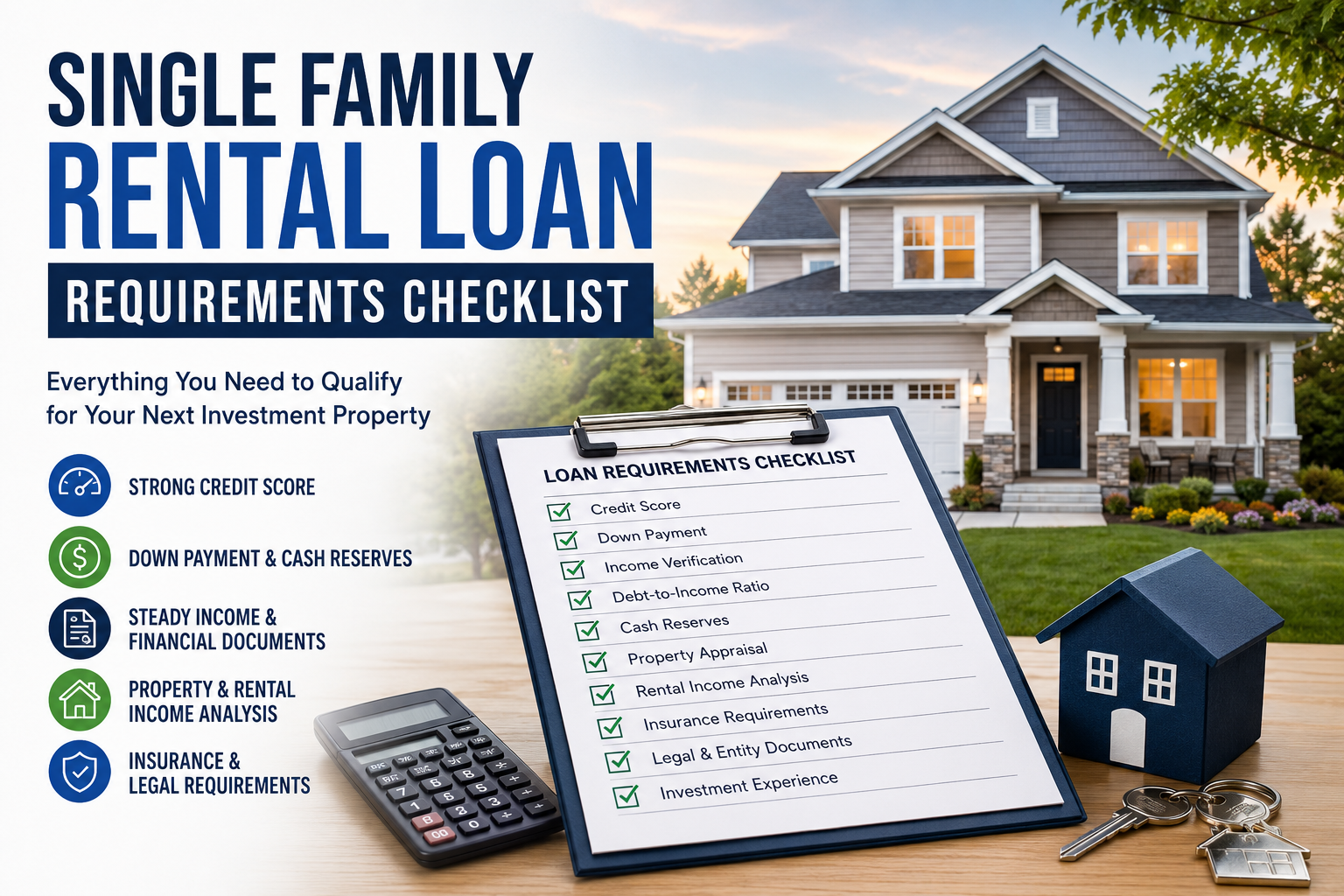
Single Family Rental Loan Requirements Checklist
Below is a comprehensive checklist covering the most common requirements lenders evaluate during the approval process.
1. Credit Score Requirements
Your credit score remains one of the most important factors in qualifying for single family rental loans.
Most lenders prefer borrowers with:
• Minimum credit score of 620
• Stronger pricing for scores above 680
• Best loan terms often reserved for scores above 720
A higher credit score demonstrates responsible financial management and lowers perceived lending risk.
Lenders may also review:
• Payment history
• Credit utilization
• Number of open accounts
• Recent inquiries
• Past bankruptcies or foreclosures
Before applying, review your credit report carefully and correct any errors that could impact your score.
2. Down Payment Requirements
Investment properties generally require larger down payments compared to primary residences.
Typical down payment expectations include:
• 15 percent to 20 percent for conventional investment loans
• 20 percent to 25 percent for multi property investors
• Lower down payment options for select programs
The exact amount depends on factors such as:
• Credit score
• Property type
• Occupancy status
• Loan program
• Number of financed properties
Borrowers with larger down payments often receive more favorable interest rates and lower monthly payments.
3. Income Verification
Most single family rental lenders require proof of stable income to ensure borrowers can comfortably manage mortgage obligations.
Common income documentation includes:
• W2 forms
• Recent pay stubs
• Tax returns
• Bank statements
• Profit and loss statements for self employed borrowers
For investors using DSCR loans, qualification may rely more heavily on the property’s rental income rather than personal income documentation.
This flexibility has made DSCR programs increasingly popular in the single family rental financing market.
4. Debt to Income Ratio
Debt to income ratio measures how much of your monthly income goes toward debt payments.
Traditional lenders often prefer:
• Debt to income ratios below 45 percent
• Strong compensating factors for higher ratios
Your debt obligations may include:
• Mortgage payments
• Auto loans
• Credit card balances
• Student loans
• Personal loans
Reducing unnecessary debt before applying can improve your approval odds and strengthen your financial profile.
5. Cash Reserves
Cash reserves demonstrate financial stability and reassure lenders that borrowers can continue making payments during vacancies or unexpected expenses.
Many single family rental lenders require reserves equal to:
• Three to six months of mortgage payments
• Additional reserves for multiple properties
Reserve funds may include:
• Checking accounts
• Savings accounts
• Retirement accounts
• Money market funds
Strong reserves can improve approval chances even if other areas of your application need strengthening.
6. Property Appraisal
The property itself plays a major role in loan approval.
Lenders order appraisals to determine:
• Current market value
• Rental income potential
• Property condition
• Comparable market sales
The appraisal helps ensure the investment aligns with acceptable lending standards.
Properties with major structural issues, deferred maintenance, or safety concerns may require repairs before approval.
7. Rental Income Analysis
Since rental income directly impacts loan performance, lenders carefully analyze the property’s income generating potential.
They may review:
• Existing lease agreements
• Market rent analysis
• Property cash flow
• Occupancy history
For DSCR loans, lenders calculate whether rental income sufficiently covers monthly mortgage obligations.
A strong cash flowing property can significantly strengthen your application.
8. Property Insurance Requirements
Adequate insurance coverage is essential for protecting both the borrower and lender.
Most lenders require:
• Hazard insurance
• Landlord insurance
• Flood insurance when applicable
Coverage must remain active throughout the loan term.
Investors should also consider liability protection and loss of rental income coverage for additional security.
9. Entity Documentation for LLC Borrowers
Many real estate investors purchase rental properties through LLCs for liability protection and business organization.
If applying through an LLC, lenders may require:
• Articles of organization
• Operating agreement
• EIN documentation
• Business bank statements
Some single family rental financing programs are specifically designed for entity ownership structures.
10. Experience and Portfolio Review
Experienced investors may qualify for expanded financing opportunities.
Lenders often evaluate:
• Number of properties owned
• Landlord experience
• Property management history
• Existing rental portfolio performance
Strong investor experience can help offset other risk factors and improve financing flexibility.
Common Mistakes That Delay Loan Approval
Even qualified borrowers can face delays due to avoidable mistakes.
Common issues include:
• Changing jobs during the loan process
• Opening new credit accounts
• Large unexplained bank deposits
• Missing documentation
• Inaccurate application information
• Underestimating reserve requirements
Staying financially consistent during underwriting is extremely important.
Tips to Improve Your Approval Chances
Preparing strategically before applying can help you secure better financing options.
Consider these best practices:
Improve Your Credit Profile
Pay down revolving debt and avoid late payments before submitting your application.
Increase Cash Reserves
Lenders value borrowers who maintain strong liquidity.
Organize Financial Documents Early
Having documents prepared in advance speeds up underwriting and reduces stress.
Choose the Right Loan Program
Different financing options suit different investment goals.
Some investors benefit from:
• Conventional loans
• DSCR loans
• Portfolio loans
• Cash out refinance programs
• Interest only financing
Working with experienced single family rental lenders can help identify the best fit for your investment strategy.
Why DSCR Loans Are Growing in Popularity
Debt Service Coverage Ratio loans have become one of the fastest growing financing solutions for rental property investors.
These programs focus primarily on property cash flow rather than personal income.
Benefits often include:
• No traditional income verification
• Faster approval timelines
• Flexible ownership structures
• Easier qualification for self employed investors
• Scalable financing opportunities
For investors looking to grow quickly, DSCR loans can provide significant advantages within the single family rental financing landscape.
How Interest Rates Affect Investment Returns
Interest rates directly influence monthly cash flow and long term profitability.
Even small rate differences can impact:
• Monthly mortgage payments
• Cash flow margins
• Return on investment
• Portfolio scalability
Investors should compare multiple loan options carefully and evaluate the total cost of financing over time.
Experienced single family rental lenders can often help structure financing solutions that align with both short term and long term investment goals.
The Importance of Working With Investor Focused Lenders
Not all mortgage lenders understand investment property financing.
Investor focused lenders typically offer:
• Flexible underwriting
• Faster closings
• Specialized loan products
• Scalable portfolio financing
• Experience with complex investor scenarios
Choosing the right lending partner can simplify the financing process and create better long term opportunities for portfolio growth.
Final Thoughts
Securing financing for rental properties does not have to feel overwhelming. Understanding the requirements in advance can help investors move confidently through the approval process while improving their chances of securing favorable terms.
By preparing your credit profile, organizing documentation, maintaining strong reserves, and selecting the right financing strategy, you can position yourself for long term investment success.
Whether you are purchasing your first investment property or expanding an established portfolio, working with knowledgeable professionals can make a meaningful difference.
At Simplending Financial, investors can explore tailored single family rental loans, flexible single family rental financing solutions, and guidance designed to help streamline the path to approval. If you are ready to finance your next rental property, now is the perfect time to evaluate your options and take the next step toward building your real estate portfolio.
Leave a Reply