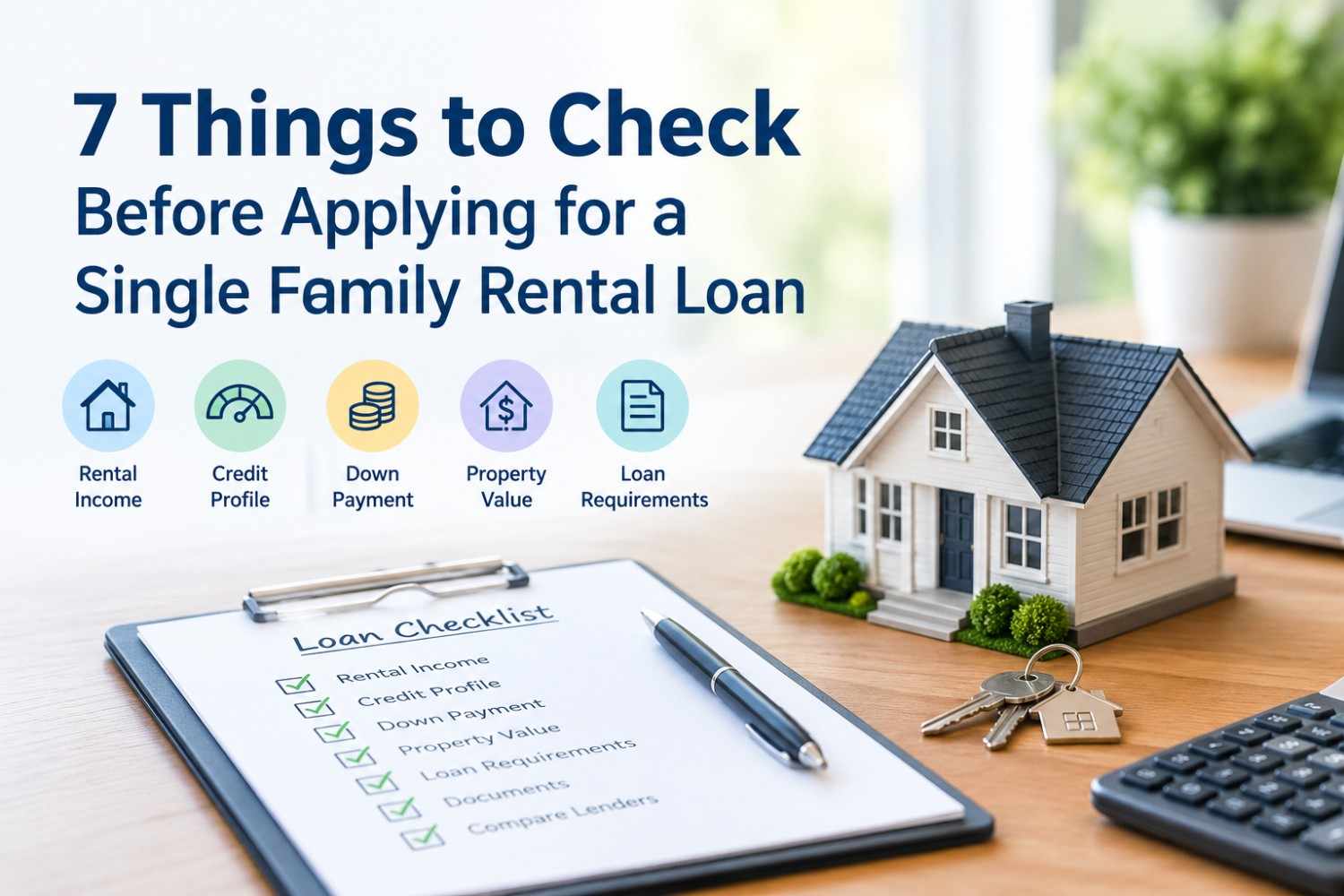
Investing in a single family rental property can be a practical way to build long term wealth and generate regular rental income. Many real estate investors in the United States purchase single family homes, rent them to tenants, and hold them as long term investments. However, buying a rental property is only one part of the process. Choosing the right financing is equally important.
Before applying for a loan, investors need to understand how lenders evaluate rental properties, what financial documents they may request, and how much money they should have available for the purchase. A property that looks profitable on paper may not always meet a lender’s requirements. Similarly, a borrower may have a strong financial background but still face challenges if the property’s rental income or condition does not support the financing request.
This is why preparing before approaching single family rental lenders can make a significant difference. It helps investors understand their financial position, identify possible problems early, and choose a financing option that supports their investment goals.
Whether you are purchasing your first rental home or expanding an existing portfolio, here are seven important things to check before applying for single family rental loans.
1. Check the Property’s Rental Income Potential
One of the first things to evaluate before applying for single family rental financing is the property’s ability to generate consistent rental income.
Rental income is important because it helps determine whether a property can support its ongoing expenses and loan payments. Many lenders consider the property’s current or expected rental income when reviewing a financing application. This is particularly important for investors exploring Debt Service Coverage Ratio, commonly known as DSCR, loans.
Start by researching rental rates for similar properties in the same neighborhood. Look at homes with comparable bedroom counts, bathrooms, square footage, property conditions, and nearby amenities. Rental prices can vary significantly even between properties located within the same city.
For example, imagine you are considering purchasing a single family home for $250,000. Similar properties in the neighborhood are renting for approximately $2,000 per month. At first glance, the property may appear to generate attractive income.
However, you should not evaluate the investment using rent alone. Consider the following expenses:
- Monthly mortgage principal and interest
- Property taxes
- Homeowners insurance
- Homeowners association fees, if applicable
- Property management expenses
- Routine maintenance and repairs
- Vacancy periods
- Unexpected property expenses
You should also understand the difference between advertised rental rates and actual rental income. A nearby property listed for $2,100 per month does not necessarily mean your property will achieve the same amount.
How Lenders Evaluate Rental Income
Depending on the loan program, lenders may review an existing lease agreement, rental payment history, tax returns, or an appraiser’s estimate of market rent.
For certain conventional investment property loans, lenders may use 75% of the estimated monthly rent for applicable qualifying calculations. This adjustment helps account for vacancy periods and ongoing property expenses. However, this is not a universal rule for every private or DSCR loan program.
For example, if the estimated monthly rent is $2,000, 75% would equal $1,500 for the applicable qualifying calculation.
Understanding this difference helps investors avoid overestimating the property’s ability to support financing.
Before applying, prepare a realistic rental income estimate supported by local market information. This gives you a clearer picture of the investment and helps you have a more productive conversation with potential lenders.
2. Review Your Credit Profile and Financial Position
Your financial background is another important factor to review before applying for a rental property loan.
Although some single family rental loans focus more heavily on the property’s income than the borrower’s personal income, this does not mean your financial background is irrelevant. Many lenders still review credit history, available assets, existing debt obligations, and the borrower’s ability to manage the investment.
Start by checking your credit reports and reviewing your credit score. Look for incorrect account information, outstanding balances, late payments, and other issues that could affect your application.
Pay attention to the following areas:
Credit history: Review whether your existing loans and credit accounts show a consistent payment history. Recent late payments or unresolved collections may raise questions during underwriting.
Existing debt: Calculate your current monthly financial obligations, including mortgage payments, car loans, credit card payments, and other outstanding debts.
Available assets: Review your checking accounts, savings accounts, and investment accounts to understand how much money you can contribute toward the transaction.
Financial consistency: Make sure your financial records are accurate and that you can explain unusual deposits or large transfers if a lender requests clarification.
Different financing programs have different credit requirements. Some traditional mortgage programs place considerable importance on personal credit and debt to income ratios. Certain DSCR and private lending programs may place greater emphasis on property performance while still evaluating borrower credit.
Do not assume that every lender follows the same qualification standards.
Before submitting your application, ask potential single family rental lenders about their credit requirements and how they evaluate an investor’s overall financial position.
A little preparation can help you identify potential concerns before they become obstacles during underwriting.
3. Calculate Your Down Payment and Available Cash Reserves
Having enough money for a down payment is important, but investors should not make the mistake of using all their available cash to purchase a rental property.
Single family rental financing generally requires investors to contribute their own funds toward the transaction. The exact down payment depends on the loan program, property value, credit profile, loan to value ratio, and other underwriting conditions.
For example, if a property costs $250,000 and a lender requires a 20% down payment, the investor would need $50,000 toward the purchase price.
However, the actual amount of money required will be higher once other transaction expenses are included.
Consider these potential costs:
- Loan origination fees
- Appraisal and inspection fees
- Title and closing expenses
- Property insurance
- Prepaid property taxes
- Escrow deposits, where applicable
- Initial repairs and maintenance
You should also maintain sufficient cash reserves after closing.
Why are cash reserves important?
Rental properties do not always generate income every month. A tenant may move out unexpectedly, a repair may become necessary, or a property may remain vacant longer than anticipated. Without available cash, even a financially attractive investment can become difficult to manage.
For example, imagine your rental property has a monthly mortgage payment of $1,800. If the property remains vacant for two months, you may need $3,600 just to cover those payments, without including other expenses.
This is why lenders may ask investors to demonstrate that they have sufficient funds available after closing.
Some conventional investment property mortgage programs have specific reserve requirements. Other private and DSCR lenders establish their own requirements based on the loan structure and risk profile.
A useful tip for investors: Prepare a separate budget for the down payment, closing costs, initial property expenses, and emergency reserves. This will help you understand how much financing you can comfortably manage without putting unnecessary pressure on your finances.
4. Evaluate the Property’s Condition and Market Value
Before applying for a single family rental loan, carefully inspect the property you intend to purchase or refinance.
A property’s condition can influence its market value, rental potential, insurance costs, and financing eligibility. Even if a home is located in a desirable neighborhood, significant repair issues may affect the lender’s decision.
Start by reviewing the property’s major structural and functional components.
Pay attention to:
- Roof condition and signs of water damage
- Foundation stability and visible cracks
- Plumbing and electrical systems
- Heating and cooling equipment
- Windows, doors, and insulation
- Kitchen and bathroom condition
- Exterior maintenance and drainage
- Safety concerns and building code issues
If you are purchasing an occupied rental property, check whether the current tenant is maintaining the home properly. If the property is vacant, estimate the work needed before it can be rented.
You should also consider whether the property is ready for immediate occupancy or requires significant renovations.
Some rental property loan programs are designed for completed, income producing properties. Others may allow certain repairs or improvements, depending on their guidelines. A property that needs substantial renovation may be better suited to a renovation loan, bridge loan, or fix and flip financing before it qualifies for longer term rental financing.
Understand the Importance of Property Valuation
Lenders generally want to establish that the property provides sufficient collateral for the requested loan amount. They may order an appraisal to determine its market value.
For rental properties, an appraisal may also include an estimate of market rent. This helps lenders understand the property’s potential rental income and evaluate whether the proposed financing is appropriate.
Do not assume that the purchase price or your estimated property value will automatically be accepted by the lender.
Before applying, research recent comparable sales and rental properties in the area. If possible, arrange a professional property inspection to identify repair issues before committing to the transaction.
A clear understanding of the property’s condition and value can help you avoid unexpected financing problems.
5. Understand the Loan Program and Qualification Requirements
Not every rental property loan works the same way. Investors should understand the available financing options before choosing a lender.
The right loan depends on your investment strategy, financial position, property performance, and how long you plan to hold the property.
Some investors prefer traditional mortgage financing, while others explore private lending or DSCR loans because their qualification needs may be different.
Here are three common financing approaches worth understanding.
Conventional Investment Property Loans
Conventional loans are generally offered through banks, credit unions, and mortgage lenders. Qualification commonly involves reviewing personal income, credit history, existing debts, assets, and the property’s value.
These loans may work well for investors who have documented income and meet the lender’s standard underwriting requirements.
DSCR Rental Property Loans
DSCR loans evaluate the property’s rental income in relation to its debt obligations.
The Debt Service Coverage Ratio is commonly calculated as:
DSCR = Net Operating Income ÷ Annual Debt Service
However, residential rental DSCR lenders may use different calculation methods. Some compare gross monthly rent with the property’s monthly principal, interest, taxes, insurance, and association dues.
For example, suppose a rental property generates $2,400 in monthly rent and its qualifying monthly housing expense is $2,000.
The DSCR under this method would be:
DSCR = $2,400 ÷ $2,000 = 1.20
This means the rental income is 1.20 times the monthly debt obligation used in the calculation.
A higher ratio generally indicates stronger rental income coverage. However, the minimum acceptable ratio varies by lender and loan program. Some programs may consider ratios below 1.00, subject to other conditions.
Remember that a qualifying DSCR does not automatically mean the property will generate positive cash flow after all operating expenses.
Private Single Family Rental Loans
Private lenders may offer financing structures designed around real estate investors and their rental property goals.
Depending on the lender, these programs may consider property value, rental income, credit, available equity, and the investor’s overall experience.
They may provide alternatives for borrowers who do not fit conventional financing guidelines. However, investors should carefully compare interest rates, fees, repayment terms, and other conditions before accepting an offer.
What Should You Ask Before Choosing a Loan?
Before applying, ask the lender:
- What property types are eligible?
- What credit requirements apply?
- How is rental income calculated?
- What down payment is required?
- Are post closing cash reserves necessary?
- What are the interest rate and loan term?
- Are there prepayment penalties or balloon payment provisions?
- What fees will be charged at closing?
Understanding these details helps you select single family rental financing that matches your investment strategy rather than choosing a loan based only on the advertised interest rate.
6. Organize Your Property and Financial Documents
Preparing your documents before applying can make the financing process more organized and reduce unnecessary delays.
Lenders need reliable information to evaluate the borrower, property, and proposed transaction. Missing documents, inconsistent financial details, or incomplete property records may lead to additional underwriting questions.
The exact paperwork depends on the loan program. A conventional mortgage application may require extensive personal income documentation, while certain DSCR programs may focus more on property income and available assets.
It is helpful to organize the following documents in advance.
Personal and Financial Documents
- Government issued identification
- Recent bank statements
- Credit authorization
- Personal tax returns, if required
- W 2 forms or income statements, if required
- Statements showing available down payment funds
- Documentation of other existing real estate loans
Property Related Documents
- Purchase and sale agreement
- Property address and basic details
- Current mortgage statement, for refinancing
- Existing lease agreements
- Rental payment records, if available
- Property tax information
- Homeowners insurance information
- Homeowners association documents, if applicable
- Property inspection or repair information, when requested
Business and Ownership Documents
If you plan to purchase or hold the property through a limited liability company, commonly known as an LLC, ask the lender about its entity requirements.
You may need to provide:
- Articles of organization
- Operating agreement
- Employer Identification Number documentation
- Ownership details
- Documents showing authority to sign on behalf of the company
Not every lender allows every type of entity ownership. Some may also require personal guarantees from the owners.
Why Rental Income Documentation Matters
If the property is already rented, keep copies of the current lease and rental payment records.
For certain conventional investment property transactions, lenders may also request tax returns and supporting rental information. The documentation requirements depend on whether the transaction involves a purchase, refinance, or an existing rental property.
If the property is vacant, the lender may request an appraisal with a market rent estimate or other acceptable rental information.
Organizing these records early helps the lender understand the transaction and gives you a clearer picture of what is needed to move forward.
7. Compare Single Family Rental Lenders and Their Loan Terms
Choosing a lender is one of the most important decisions you will make when arranging financing for an investment property.
Two lenders may offer financing for the same property but have different eligibility requirements, loan amounts, interest rates, fees, and repayment conditions.
This is why investors should avoid selecting a lender based only on the lowest advertised rate.
Start by comparing the overall financing structure.
Interest Rates and Loan Costs
Review the proposed interest rate, origination fees, discount points, underwriting charges, and other closing expenses.
A loan with a lower interest rate may still have higher upfront costs. Calculate the total amount you will pay to understand the actual cost of financing.
Loan to Value Ratio
The loan to value ratio, or LTV, compares the requested loan amount with the property’s appraised value or another value basis specified by the lender.
For example, if a property is valued at $250,000 and the lender offers a loan of $187,500, the LTV is 75%.
A lower LTV generally means the investor contributes more equity, but the actual loan amount depends on the lender’s guidelines and other underwriting factors.
Loan Repayment Terms
Check whether the loan has a fixed or adjustable interest rate. Understand the repayment period, monthly payment structure, and whether the loan includes a balloon payment.
Some investor loans may have shorter terms than traditional residential mortgages. Make sure you understand what happens when the loan reaches maturity.
Prepayment Conditions
If you plan to refinance or sell the property before the loan matures, check whether a prepayment penalty applies.
Some loans include restrictions or additional charges for paying off the balance early. These conditions can affect your investment returns.
Lender Experience and Communication
A lender’s experience with rental property financing also matters.
Ask how the application process works, what documents are required, how appraisals are handled, and who will communicate with you during underwriting.
You should also confirm whether the lender directly provides the financing or acts as an intermediary.
Working with a lender that understands real estate investment financing can make it easier to discuss your property’s rental income, investment strategy, and financing needs.
Ultimately, the best financing option is not necessarily the one with the lowest interest rate. It is the one whose costs, requirements, repayment terms, and structure make sense for your investment.
Final Thoughts
Applying for a single family rental loan requires more preparation than simply finding a property and deciding how much money to borrow. Investors need to understand the property’s rental income potential, review their financial position, calculate their available funds, and compare financing options before submitting an application.
Taking time to review these seven areas can help you identify potential problems early and make more informed financing decisions. It can also help you approach lenders with realistic expectations about the property’s value, rental income, and overall investment potential.
Whether you are purchasing your first rental home or expanding an existing portfolio, the right financing structure can support your long term investment plans.
Simplending Financial provides real estate investment financing options for investors looking to purchase or refinance rental properties. If you are exploring single family rental loans, contact Simplending Financial to discuss your financing needs and learn more about available loan options.
Frequently Asked Questions About Single Family Rental Loans
1. What do lenders look for when approving a single family rental loan?
Lenders generally evaluate the borrower’s credit profile, available funds, property value, rental income, existing financial obligations, and property condition. Some programs also consider the Debt Service Coverage Ratio to determine whether the rental income can support the property’s debt payments. Requirements vary by lender and loan type.
2. How much down payment do you need for a single family rental property loan?
The required down payment depends on the lender, loan program, property value, credit profile, and transaction details. Some conventional investment property mortgage programs allow qualified borrowers to purchase a one unit rental property with 15% down. Private and DSCR lenders may have different requirements. Investors should also budget for closing costs and cash reserves.
3. Can you get a single family rental loan without personal income verification?
Yes, certain DSCR and private rental property loan programs may allow investors to qualify primarily based on the property’s rental income rather than traditional personal income documentation. However, lenders may still review credit, assets, available reserves, property value, and other financial details. Not all programs offer the same documentation requirements.
4. What is a good DSCR for a single family rental property?
A DSCR of 1.20 is often considered a useful target because it indicates that the income used in the calculation is 20% higher than the qualifying debt payment. However, there is no universal minimum. Some lenders accept lower ratios, while others prefer higher coverage. The required ratio depends on the loan program and its underwriting guidelines.
5. Can you use rental income to qualify for a single family rental loan?
Yes. Many rental property loan programs consider current or expected rental income when evaluating an investment property. Depending on the financing program, lenders may review signed lease agreements, rental payment records, tax returns, or an appraisal’s market rent estimate. Some DSCR programs primarily evaluate property income instead of relying on traditional personal income calculations.
6. Can you get a single family rental loan through an LLC?
Yes, some private and DSCR lenders allow investors to purchase or refinance rental properties through an LLC. However, entity ownership requirements vary. Lenders may request formation documents, an operating agreement, ownership information, and a personal guarantee from the borrower or company owner.
7. Do single family rental lenders require landlord experience?
Not necessarily. Some lenders accept applications from first time rental property investors, while others may consider previous landlord or property management experience during underwriting. The importance of experience depends on the loan program, property type, and overall borrower profile.
8. Can you refinance an existing single family rental property?
Yes. Investors may be able to refinance an existing rental property to change their financing terms, obtain a different repayment structure, or access available equity through a cash out refinance. Approval depends on the property’s current value, outstanding mortgage balance, rental income, credit profile, and lender requirements.
9. What documents are required for a single family rental loan application?
Commonly requested documents include government issued identification, bank statements, proof of available funds, property details, purchase agreements, lease agreements, rental payment records, and insurance information. Depending on the loan program, lenders may also request personal tax returns, income statements, entity documents, and existing mortgage statements.
10. How long does it take to get approved for a single family rental loan?
The timeline varies depending on the lender, loan program, property appraisal, title review, documentation, and underwriting requirements. Some private lending programs may offer a faster process than conventional mortgage financing. However, investors should not assume a particular closing timeline until the lender reviews the complete application.
Leave a Reply